The Elegiac Structure
The Elegiac Structure
An elegy is a poem of grief—a lament—usually melancholic in tone, mourning its subject's death or loss. Often, an elegy ends with some kind of consolation, but as we’ll see in our examination of the elegiac structure, not necessarily. (If you’d like to read more about the elegy and its history, there’s a pretty comprehensive offering about it in “Edward Hirsch’s Poetic Glossary” at Poets.org.)
As D. A. Powell explains in his essay, “The Elegiac Structure,” (Structure & Surprise: Engaging Poetic Turns, Theune, editor, Teachers & Writers Collaborative, 2007):
The structure of the elegy is difficult to pin down; in fact, the elegy is more a mode of thinking, or a complex set of conventions, than a single structure. … Its turns can be multiple and various. Additionally, many of the elegy’s conventions, including invocations and references to and calls for additional mourners, are structural. It is impossible to limit the elegiac mode to just one clear set of turns.
And yet, the elegy originates in an age-old desire; to bring the beloved back from obscurity, whether in a real or an imagined way. And this desire has an archetypal pattern of descent and ascent. [Think Orpheus and Eurydice.]
… Three central elegiac structures stem from this mythic pattern. All three descend, but each emerges from the descent in a very different way.
Each of these elegiac ascents can be located in one of the following three turns: a turn from grief to consolation; a turn from grief to the refusal of consolation; and a turn from grief to further, deeper grief.
To me, this is a deeper truth of what an elegy might express. The idea that an elegy is some sort of time’s arrow from loss to mourning to consolation—even if in retrospect or after a lifetime—seems woefully inadequate considering the personal losses one might want to elegize, let alone grief of a collective nature. I also want to note that modern elegies cover the gamut of loss.
Take a look at the first type of elegiac turn, from grief to consolation, in this poem by Brigit Pegeen Kelly aptly titled, “Elegy.”

Brigit Pegeen Kelly
Elegy
by Brigit Pegeen Kelly
Wind buffs the waterstained stone cupids and shakes
Old rain from the pines’ low branches, small change
Spilling over the graves the years have smashed
With a hammer— forget this, forget that, leave no
Stone unturned. The grass grows high, sweet-smelling,
Many-footed, ever-running. No one tends it. No
One comes….And where am I now?…. Is this a beginning,
A middle, or an end?…. Before I knew you I stood
In this place. Now I forsake the past as I knew it
To feed you into it. But that is not right. You step
Into it. I find you here, in the shifting grass,
In the late light, as if you had always been here.
Behind you two torn black cedars flame white
Against the darkening fields…. If you turn to me,
Quiet man? If you turn? If I speak softly?
If I say, Take off, take off your glasses.… Let me see
Your sightless eyes?…. I will be beautiful then….
Look, the heart moves as the moths do, scuttering
Like a child’s thoughts above this broken stone
And that. And I lie down. I lie down in the long grass,
Something I am not given to doing, and I feel
The weight of your hand on my belly, and the wind
Parts the grasses, and the distance spills through—
The glassy fields, the black black earth, the pale air
Streaming headlong toward the abbey’s far stones
And streaming back again…. The drowned scent of lilacs
By the abbey, it is a drug. It drives one senseless.
It drives one blind. You can cup the enormous lilac cones
In your hands— ripened, weightless, and taut—
And it is like holding someone’s heart in your hands,
Or holding a cloud of moths. I lift them up, my hands.
Grave man, bend toward me. Lay your face…. here….
Rest….! took the stalks of the dead wisteria
From the glass jar propped against the open grave
And put in the shell-shaped yellow wildflowers
I picked along the road. I cannot name them.
Bread and butter, perhaps. I am not good
With names. But nameless you walked toward me
And I knew you, a swelling in the heart,
A silence in the heart, the wild wind-blown grass
Burning— as the sun falls below the earth—
Brighter than a bed of lilies struck by snow.
from The Orchard, BOA Editions, Ltd., 2004

Everything I’ve ever read by Kelly is astonishingly lush—every line, a feast. And while her work is often dense, it is immensely readable. One thing you’ll start to notice as you add to our tool-kit of turns, is that poems often employ multiple structures and turns, or substructures perhaps. For instance, in addition to being an elegy, this poem uses the descriptive-meditative structure, at least as a substructure. Notice the turn from description to reflection in the seventh line:
Wind buffs the waterstained stone cupids and shakes
Old rain from the pines’ low branches, small change
Spilling over the graves the years have smashed
With a hammer— forget this, forget that, leave no
Stone unturned. The grass grows high, sweet-smelling,
Many-footed, ever-running. No one tends it. No
One comes….And where am I now?…. Is this a beginning,
A middle, or an end?…. Before I knew you I stood
In this place. Now I forsake the past as I knew it
After that turn, notice the shift to a completely different dimension. The next lines exquisitely express the speaker’s grief:
To feed you into it. But that is not right. You step
Into it. I find you here, in the shifting grass,
In the late light, as if you had always been here.
Behind you two torn black cedars flame white
Against the darkening fields…. If you turn to me,
Quiet man? If you turn? If I speak softly?
If I say, Take off, take off your glasses…. Let me see
Your sightless eyes?…. I will be beautiful then….
Look, the heart moves as the moths do, scuttering
Like a child’s thoughts above this broken stone
And that. And I lie down. I lie down in the long grass,
Something I am not given to doing, and I feel
The weight of your hand on my belly, and the wind
Parts the grasses, and the distance spills through—
The glassy fields, the black black earth, the pale air
Streaming headlong toward the abbey’s far stones
And streaming back again…. The drowned scent of lilacs
By the abbey, it is a drug. It drives one senseless.
It drives one blind. You can cup the enormous lilac cones
In your hands— ripened, weightless, and taut—
And then, the bittersweet moment of consolation:
And it is like holding someone’s heart in your hands,
Or holding a cloud of moths. I lift them up, my hands.
Grave man, bend toward me. Lay your face…. here….
Rest….! took the stalks of the dead wisteria
From the glass jar propped against the open grave
And put in the shell-shaped yellow wildflowers
I picked along the road. I cannot name them.
Bread and butter, perhaps. I am not good
With names. But nameless you walked toward me
And I knew you, a swelling in the heart,
A silence in the heart, the wild wind-blown grass
Burning— as the sun falls below the earth—
Brighter than a bed of lilies struck by snow.
Whoa, right!? I don’t think I could ever read this poem without weeping. The final three lines almost seem to put this in the “grief to further grief” category of elegy, but I don’t think it truly belongs there. For me the evidence of consolation culminates in the two lines that precede those lines:
… But nameless you walked toward me
And I knew you, a swelling in the heart,
Now take a look at Wisława Szymborska’s (read about her here) poem, “Photograph from September 11,” a profound example of an elegy that employs the loss to refusal of consolation turn.

Wisława Szymborska
Photograph from September 11
by Wisława Szymborska, translated by Clare Cavanagh
They jumped from the burning floors—
one, two, a few more,
higher, lower.
The photograph halted them in life,
and now keeps them
above the earth toward the earth.
Each is still complete,
with a particular face
and blood well hidden.
There’s enough time
for hair to come loose,
for keys and coins
to fall from pockets.
They’re still within the air’s reach,
within the compass of places
that have just now opened.
I can do only two things for them—
describe this flight
and not add a last line.
from Monologue of a Dog, Houghton Mifflin Harcourt, 2005.

Known for her ability to write the unspeakable, Szymborska does not flinch from the first line to the “absent” last line of this poem. While one might not read this as an elegy at first glance, a second pass reveals an exquisitely tender elegy. Szymborska deftly locates us right there, with the subjects of the poem, hair loosened, keys and coins falling from pockets. These details capture the humanity in this photograph and mourn what has been lost—someone’s son/daughter/husband/wife/mother/father/ lover/friend. The turn in the final stanza, the poet’s refusal of consolation, is absolutely stunning:
I can do only two things for them—
describe this flight
and not add a last line.
Lastly, here are two poems that exemplify the turn from grief to further grief. The first is a poem by Polish poet, Anna Swir (Świrszczyńska). (Here’s a link to biographical information about her.)
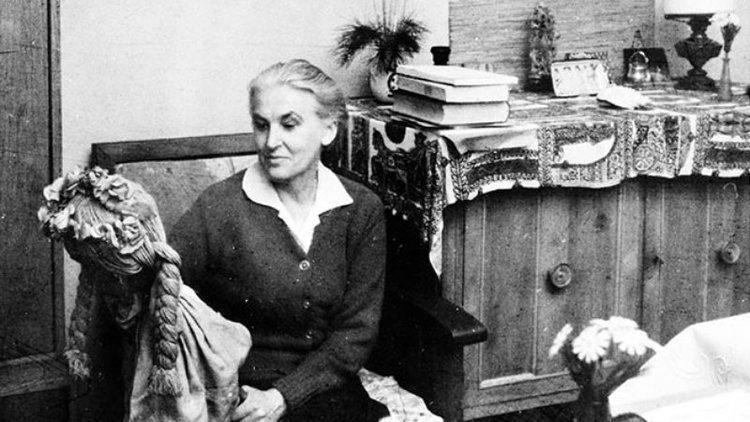
Anna Swir
I’ve Been Waiting These Thirty Years
by Anna Swir, translated by Magnus Jan Krynski and Robert A. Maguire
That young beanpole was maybe six feet tall,
that light-hearted worker from Powiśle
who fought
in the hell on Zielna Street, in the telephone building.
When I changed his bandage on
his leg that was torn open
he winced, he laughed.
‘When the war’s over
we’ll go dancing, miss,
It’s on me.’
I’ve been waiting for him
these thirty years.
from Postwar Polish Poetry, Third Expanded Edition, An Anthology Selected and Edited by Czesław Miłosz, University of California Press, 1983.
The turn in that poem is pretty obvious and clearly the loss has never been resolved. Finally, let’s look at Natasha Trethewey’s “Graveyard Blues,” which as the title reveals, is an elegy in the blues poem form.
Graveyard Bluesby Natasha Trethewey
It rained the whole time we were laying her down;
Rained from church to grave when we put her down.
the suck of mud at our feet was a hollow sound.
When the preacher called out I held up my hand;
When he called for a witness I raised my hand-
Death stops the body's work, the soul's a journeyman.
The sun came out when I turned to walk away,
Glared down on me as I turned and walked away-
My back to my mother, leaving her where she lay.
The road going home was pocked with holes,
That home-going road's always full of holes;
Though we slow down, time's wheel still rolls.
I wander now among names of the dead:
My mother's name, stone pillow for my head.
from Native Guard, Mariner Books, 2007
Trethewey is known for her facility with form and language and also for her restraint, which is in evidence here. Still, the poem turns vividly from grief to a deeper grief:
I wander now among names of the dead:
My mother's name, stone pillow for my head.
Next week you’ll be looking at another of Trethewey’s poems which primarily functions through the work of the mid-course turn structure, but is also an elegy that turns from grief to deeper grief.