Introduction
Introduction
Relook, Rethink, Renew: Rewilding Nature Poems
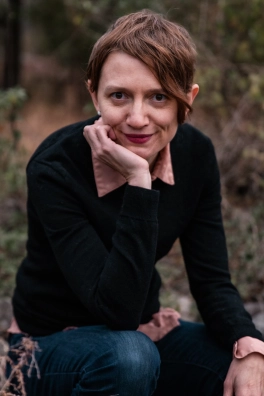
Since I look forward to learning more about why you’ve decided to take this class, I thought it would make sense to begin with why I wanted to teach it (hopefully our reasons align!). From an early age, I was drawn to plants and animals, to the nonhuman world. I spent much of my childhood exploring the pasture behind the farmhouse where I grew up or walking down to the creek to sit on the culvert. Some of my favorite memories involve landscape: the first time I saw a redwood tree. Swimming in the Caribbean Sea off the coast of Montserrat, bioluminescent creatures flickering under the moonlight. The first snowy walk in winter. Dipping my body into hot springs. Spring’s first ephemerals.
And I imagine, like me, you also receive joy, wonder, and comfort from nature, while at the same time suffer from climate grief. I have read so many wonderful but heartbreaking books on the state of the world: The Sixth Extinction by Elizabeth Kolbert is, as you might guess, not the most uplifting of reads. Even a book like Jennifer Ackerman’s wonderful The Genius of Birds, while wowing me with the intelligence of birds, bums me out because of the terrifying rate at which bird populations are diminishing.
Therefore I wanted to teach this class because so much of what matters most to me lies at this intersection of joy and sorrow, praise and mourning. I’ve struggled with questions like, how do we write about what isn’t human with respect? How do we do this without centering our own grief or joy and making the world merely a mirror through which to better see ourselves? That kind of limited seeing is part of what got us into this mess in the first place.
Even saying “Us” in that last sentence feels problematic: the humans least responsible for the climate crisis are, in many cases, the ones who are and will suffer the most from its consequences. As a white, cisgendered queer person, I can revel in “queering” my relationship to the planet, but that doesn’t rid me of a needling guilt about what people who share my European ancestry have done to this planet.
Then of course there’s the weight of what one person can realistically do: recycle, reuse, reduce? I think often of the TV show The Good Place and how the heaven it imagines has become impossible to obtain because every “good” choice is so entangled with problematic systems that no one, even with the best of intentions, can be “pure” in our decision making (purity being another problematic concept in it of itself).
So what are we to do? Are we just going to write poems about it? Well, I think we have to. At least I do.
Now that I’ve depressed us sufficiently, here’s what I hope we gain from this class together:
Of course a poem isn’t going to cool the planet or save the elephants. But in writing a poem, we are attending to a subject we care about; we are engaged in a healing process–and I’d argue (stay with me), a mystical process: we are writing into the world its recovery. Slowly. Almost imperceptibly. But think of all the small patterns that make a fractal. All the tiny ripples of water that push a wave. In encountering the texts and ideas I’ve gathered for this class, my hope is that you write poems that surprise and move you, and that they move you in the direction of what you care about. I’m not saying every poem is a call to action, but perhaps every poem is a calling.
With all that said, each week, we’ll look at some words of wisdom from nature writers of a variety of backgrounds, writing in a mix of prose and poetry, allowing us to think about nature in ways that might feel less familiar, that might help you “rewild” your creative practice as well as your relationship with the nonhuman world.
Joanna Macy
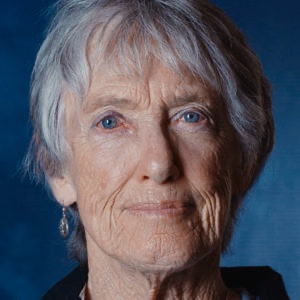
Joanna Macy
To that end, we’ll begin with some words of wisdom from World as Lover, World as Self by Joanna Macy (Parallax Press, Berkeley, CA 1991). Macy, an environmental activist, author, and Buddhist scholar, offers in her work a hopeful lens through which to think about the climate crisis; even though her book is over 30 years old, I find her messages in it still resonant with the current phase of the crisis. One of the reasons she gives me hope is that she allows for despair. Here are some excerpts that point to this:
“Despair, in this context, is not a macabre certainty of doom or a pathological condition of depression and futility. It is not a nihilism denying meaning or efficacy to human effort. Rather, as it is being experienced by increasing numbers of people across a broad spectrum of society, despair is the loss of the assumption that the species will inevitably pull through. It represents a genuine accession to the possibility that this planetary experiment will end, the curtain rung down, the show over.” (Macy 17)
“Despair is tenaciously resisted because it represents a loss of control, an admission of powerlessness. Our culture dodges it by demanding instant solutions when problems are raised. My political science colleagues in France ridiculed this, I recall, as an endemic trait of the American personality. 'You people prescribe before you finish the diagnosis,' they would say. 'Let the difficulties reveal themselves first before rushing for a ready-made solution or else you will not understand them.' To do this would require that one view a stressful situation without the psychic security of knowing if and how it can be solved—in other words, a readiness to suffer a little.” (Macy 18-19)
“Such pain for the world becomes masochistic only when we assume personal guilt for its plight or personal responsibility for its solution. No individual is that powerful. Certainly by participation in society each shares in collective accountability; but the acknowledgement of despair, like faith, is a letting go of the manipulative assumption that conscious ego can or should control all events. Each of us is but one little nexus in a vast web. As the recognition of that interdependence breaches our sense of isolation, so does it also free our despair of self-loathing.” (Macy 21)
“We are not objects that can break. As open systems, we are, cyberneticist Norbert Wiener said, ‘but whirlpools in a river of ever flowing water. We are not stuff that abides, but patterns that perpetuate themselves.’ We do not need to protect ourselves from change, for our very nature is change. Defensive self-protection, restricting vision and movement like a suit of armor, makes it harder to adapt. It not only reduces flexibility, but blocks the flow of information we need to survive. Our “going to pieces,” however uncomfortable a process, can open us up to new perceptions, new data, new responses.” (Macy 22)
What I love from these excerpts is the acceptance that it is foolish to imagine any one of us is responsible for “saving the planet.” That narrative is a distraction. Second, despair is part of the experience of being human in this time and place–but despair can be relieved, at least a little, if we think of ourselves not as “objects that can break,” but “as open systems” as “flow-throughs” for ideas, action, art–and yes, poetry.
So, let’s begin with some poems that reside in the tension between despair and joy in the natural world and see how these writers manage this trick.